Bathroom floors and shower walls, kitchen backsplashes, mudrooms, fireplace surrounds, and feature walls — installed by a licensed Massachusetts contractor who treats waterproofing as non-negotiable.
Tile is one of the few materials in a house that can be both purely functional and the design centerpiece of a room. A well-laid tile floor lasts for decades. A poorly-laid one looks crooked from day one and stays crooked. We focus on tile installation because the difference between a tile job that holds up and a tile job that fails is almost entirely about prep, layout, and installation method — and we don’t compromise on any of them.
Where tile makes the biggest difference in a MetroWest home:
Flat, clean, dry, and properly supported. Cement board or Schluter-Ditra over plywood, never raw drywall in wet areas.
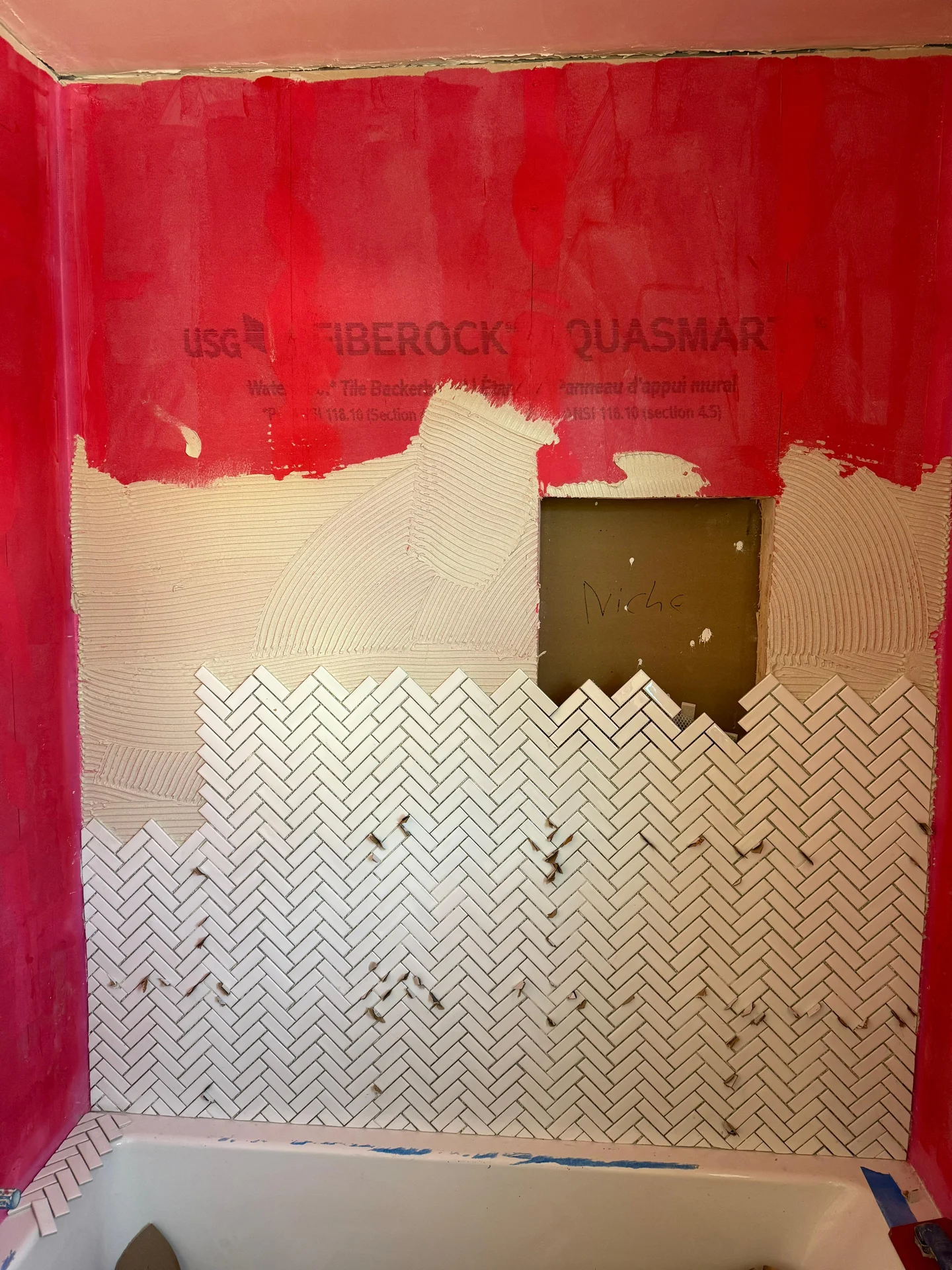
Schluter-Kerdi, RedGard, or Wedi for showers and wet zones. Non-negotiable.
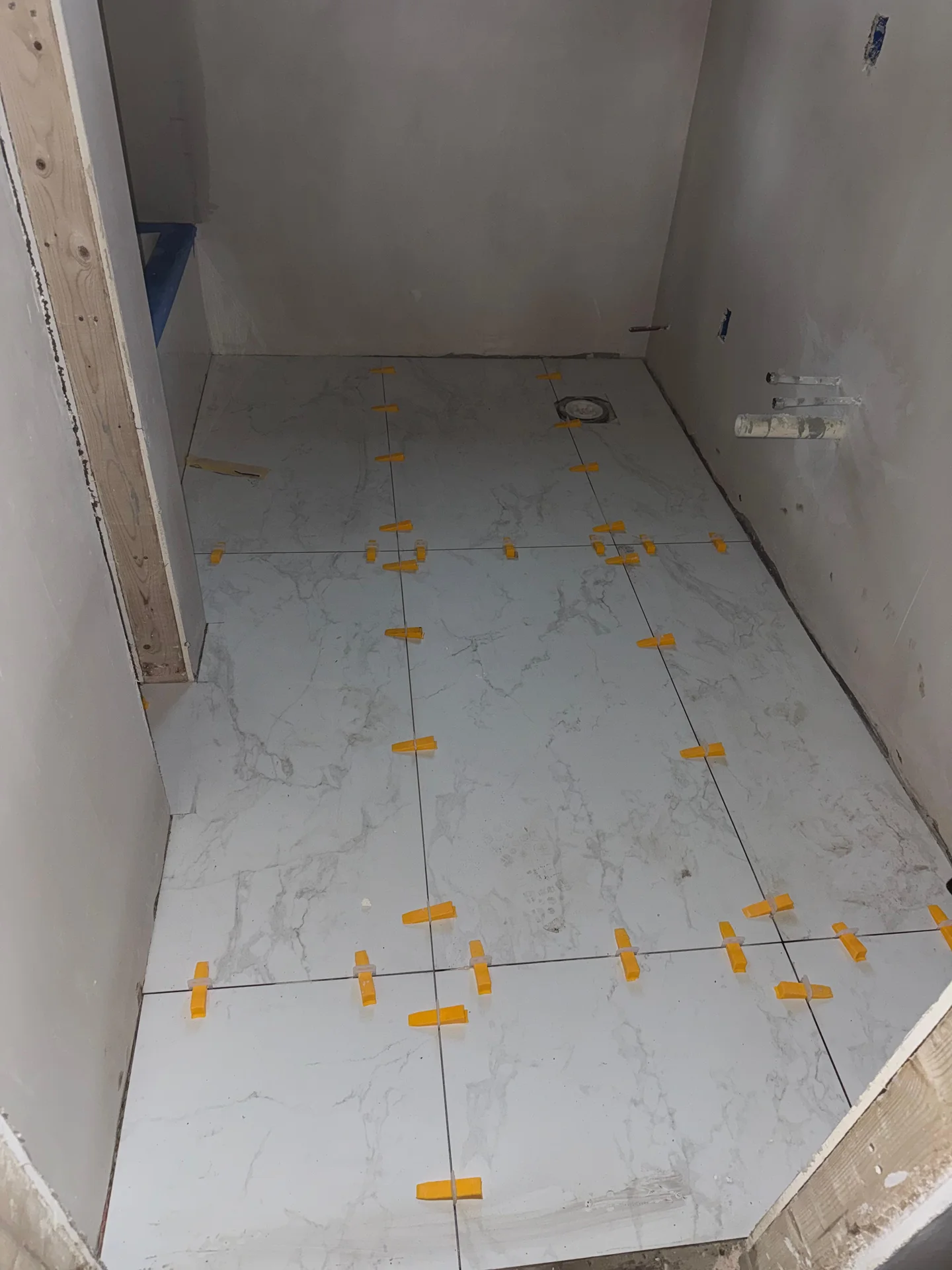
We snap chalk lines and dry-fit tile before mixing thinset. Center every pattern, balance every cut edge.
Proper thinset for the tile type. Back-buttering on large format. Wet saw cuts with sharp blades.
Right grout type (sanded or unsanded), even joint cleanup, and proper sealing — including pre-grout sealing on natural stone.
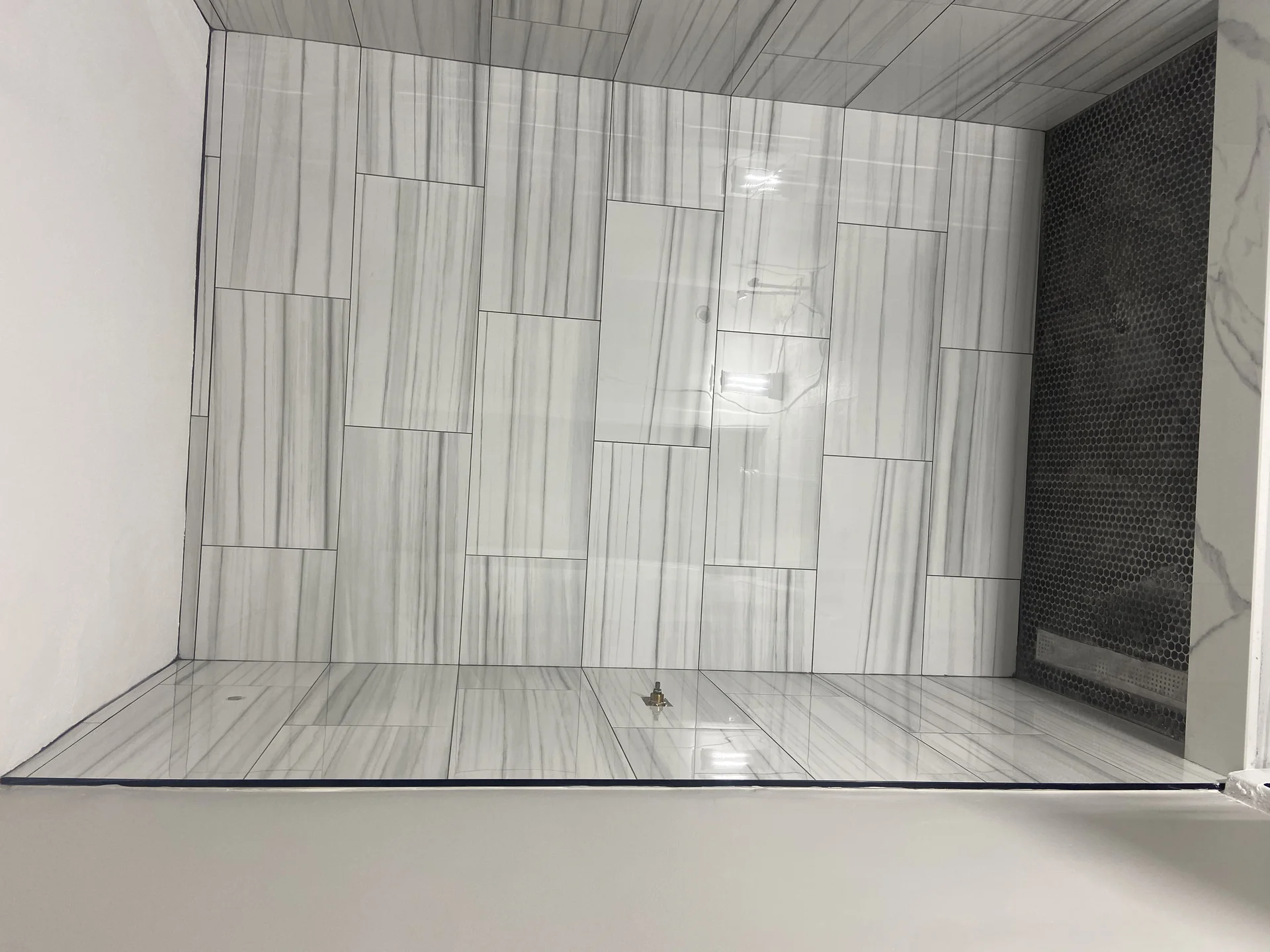
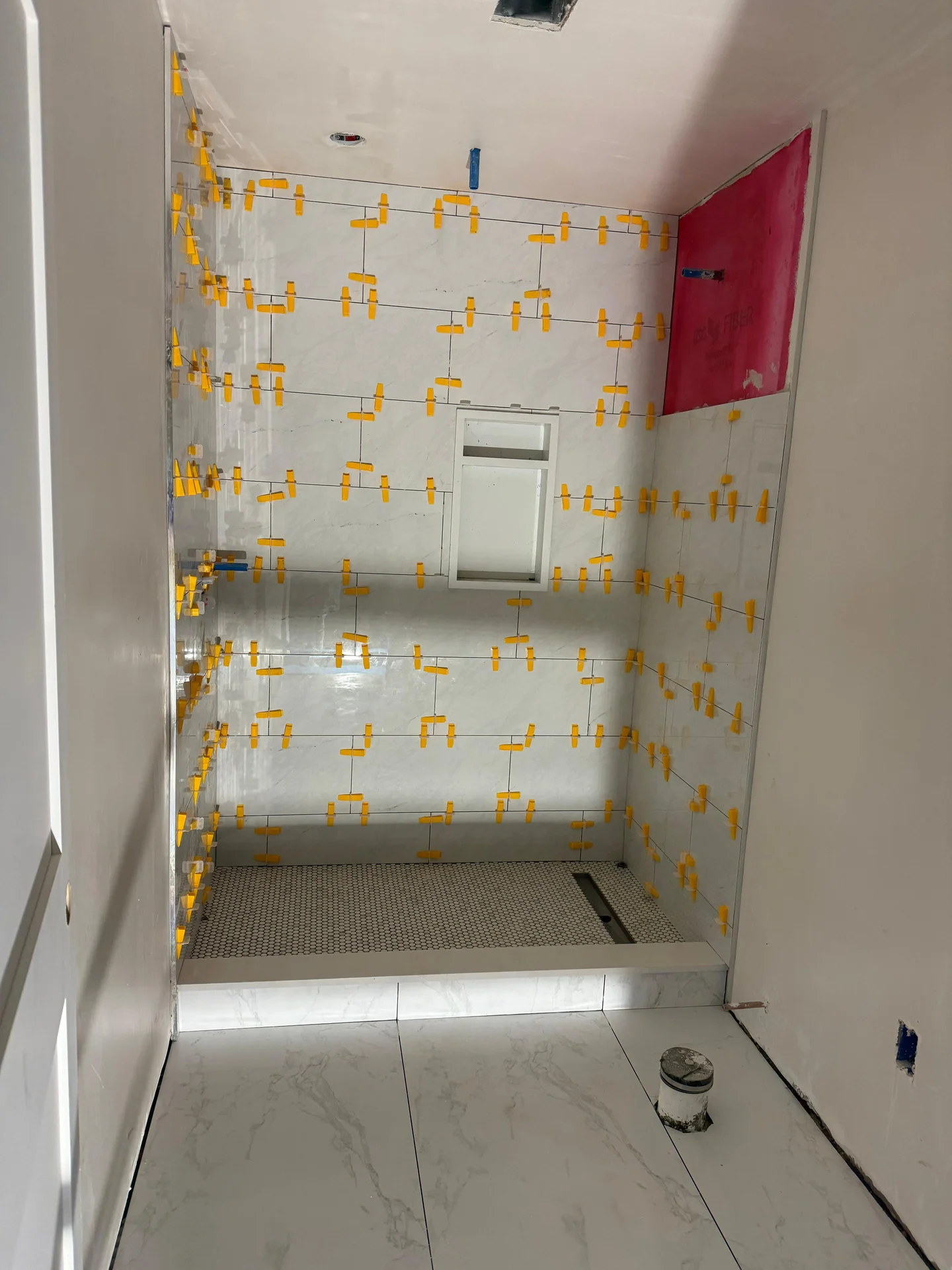
The single most important step in a tile shower is waterproofing — the layer behind the tile that prevents water from rotting framing and growing mold. We use proven systems:
We don’t tile over drywall in wet zones. Ever. That’s how showers fail.
An optional add-on that turns a cold morning tile floor into a luxury experience. We install:
Requires a dedicated electrical circuit and programmable thermostat. Adds typically $8-15 per square foot installed.
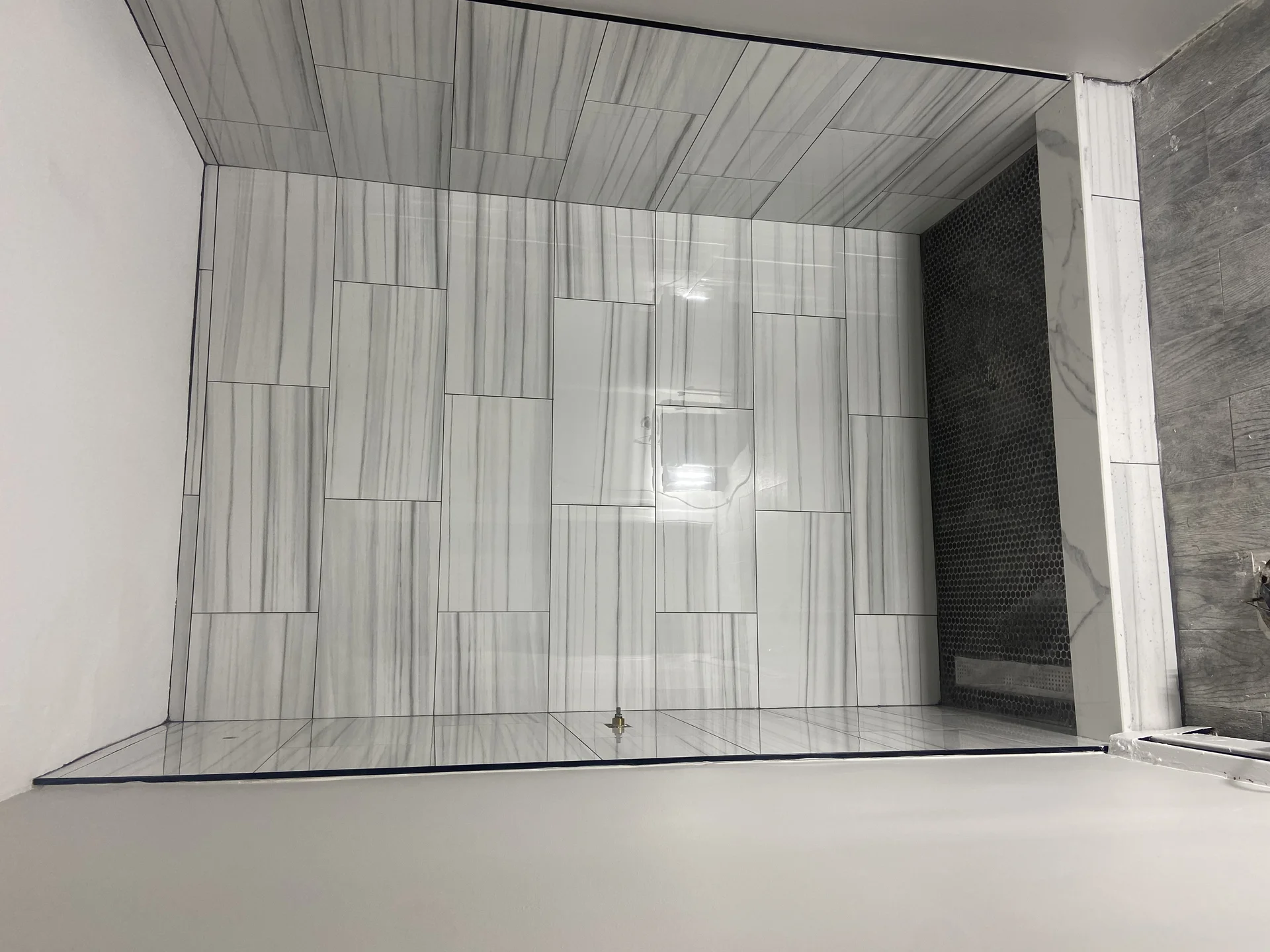
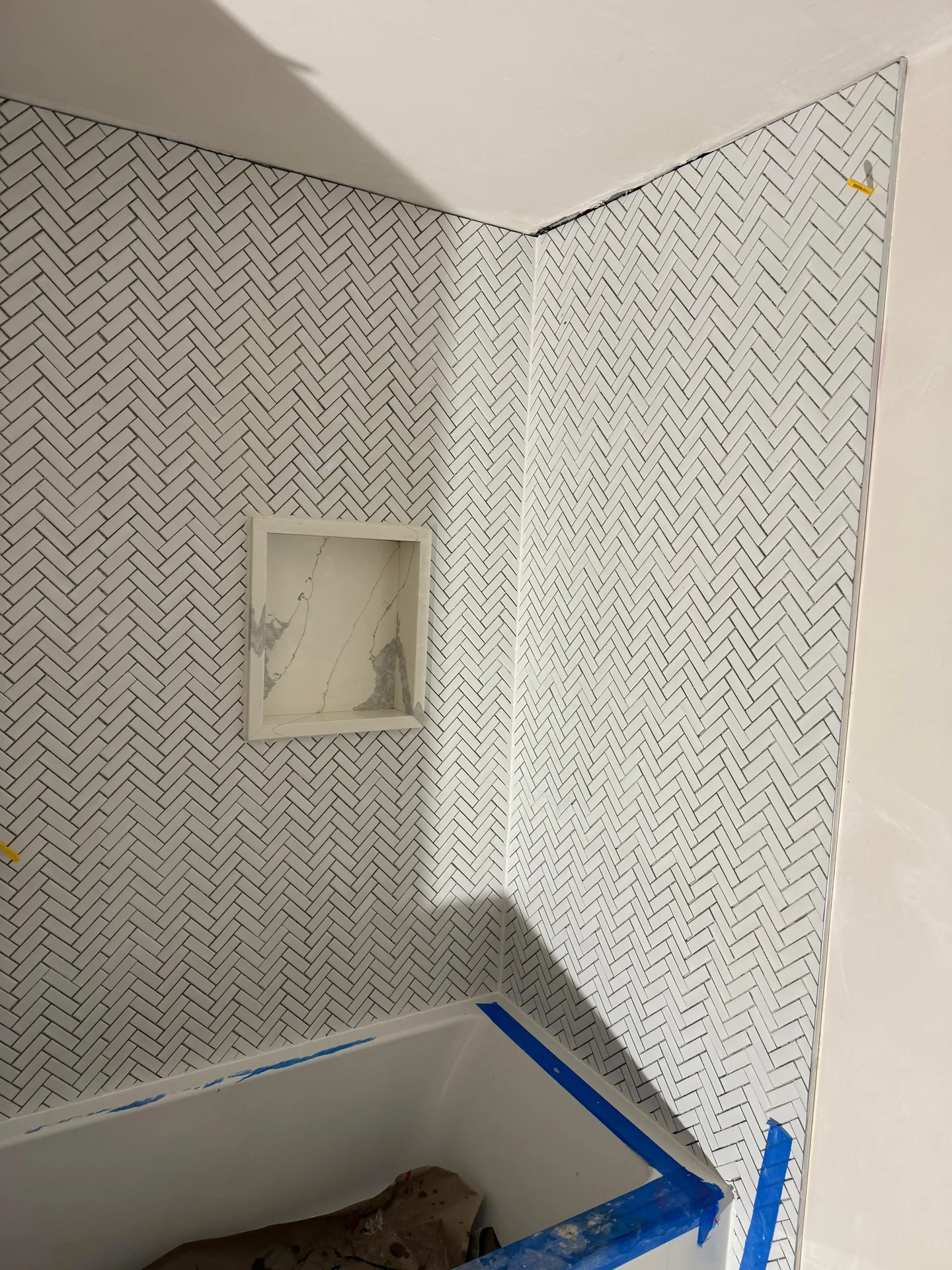
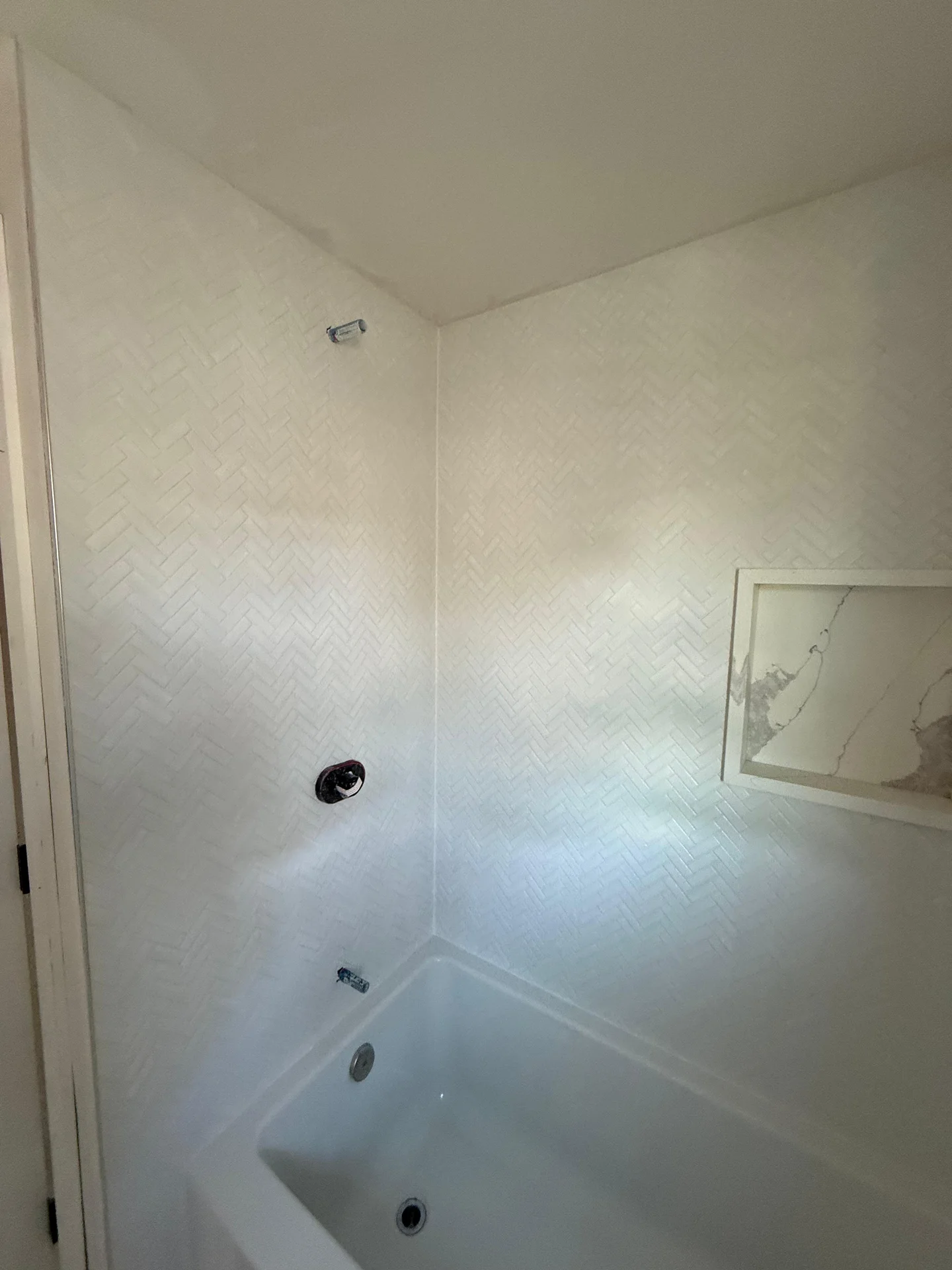
The pattern matters as much as the tile itself:
Marlborough • Hudson • Northborough • Southborough • Westborough • Shrewsbury • Framingham • Sudbury • Natick • Ashland • Hopkinton
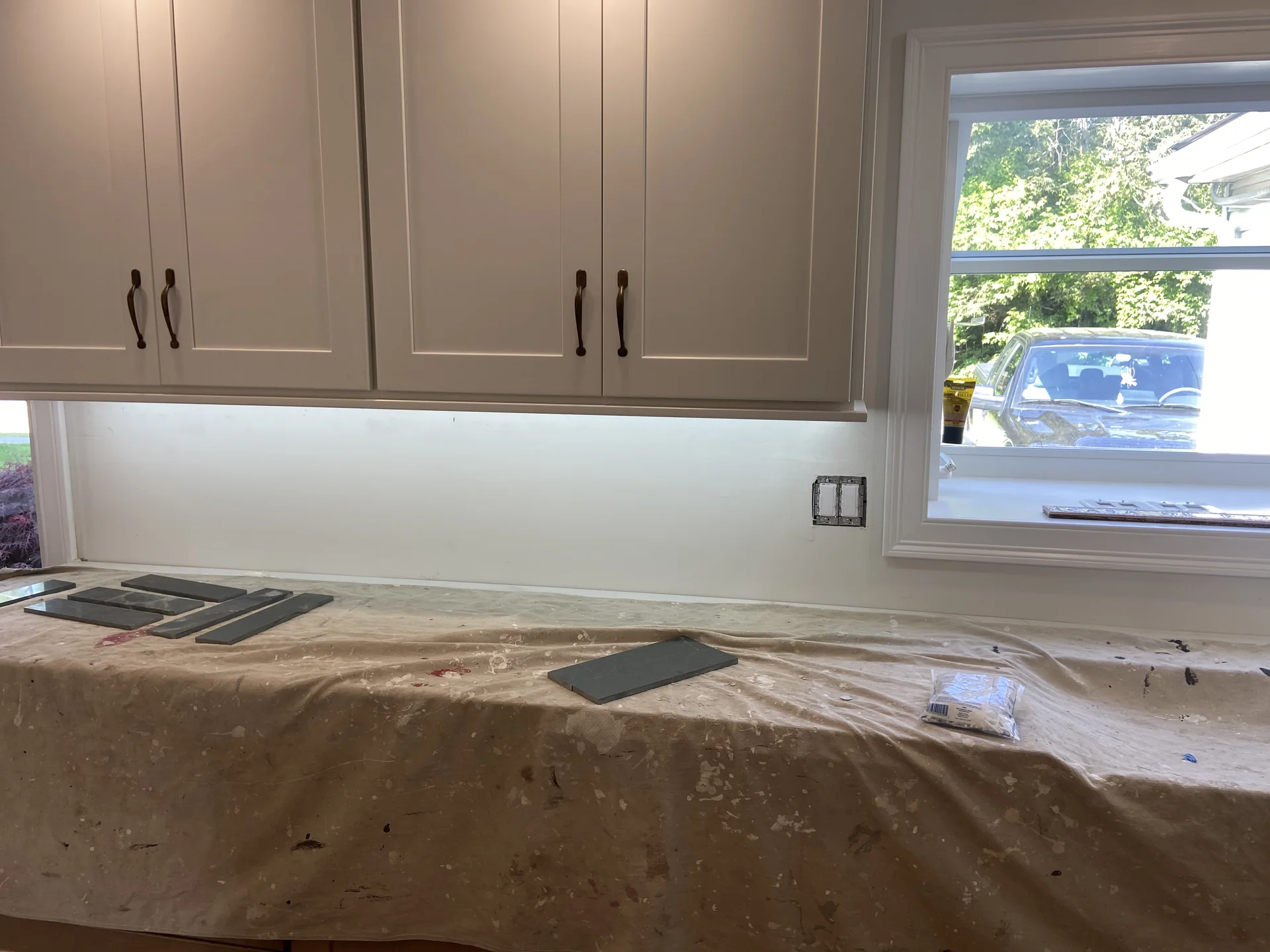
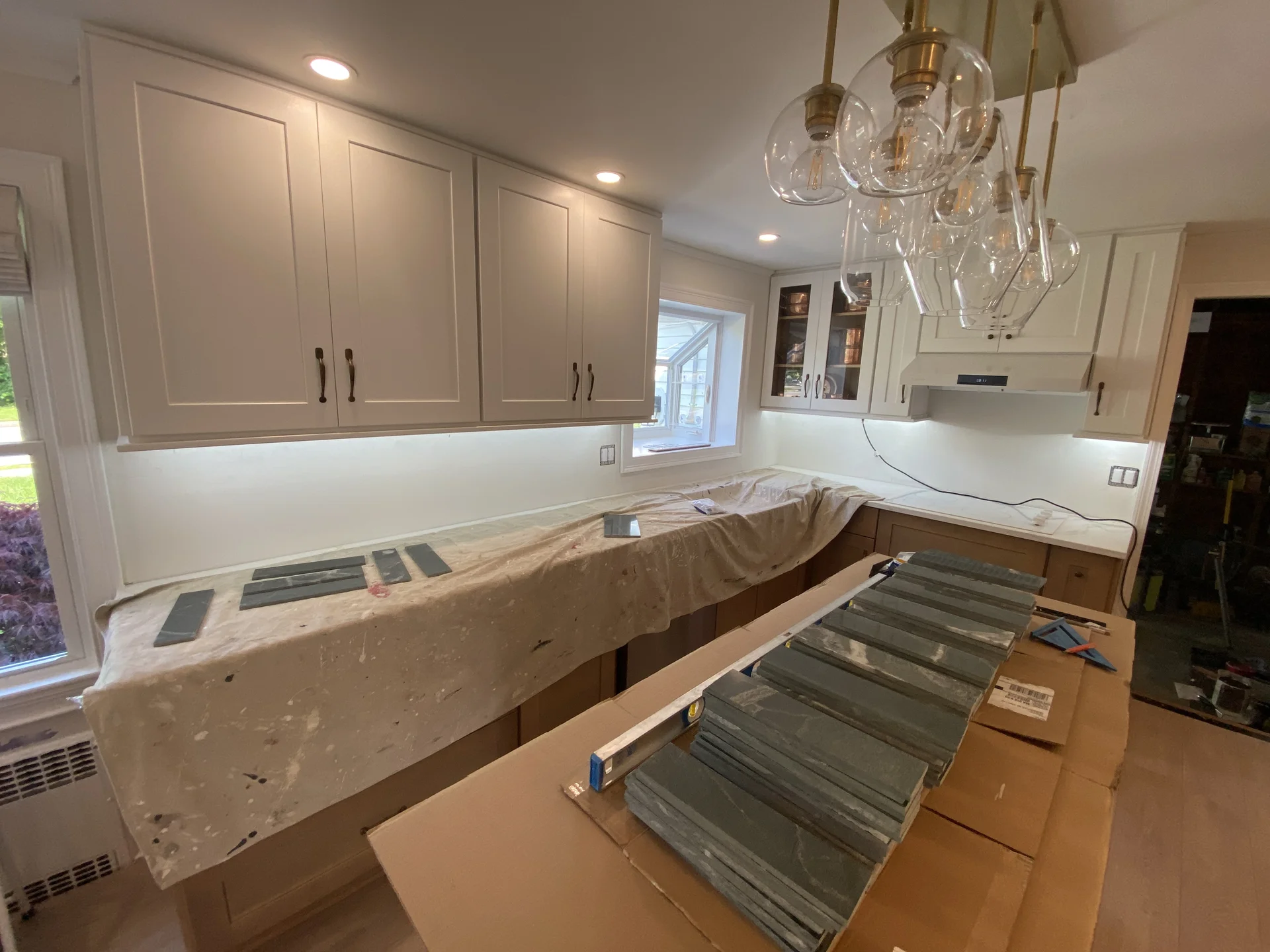
A typical bathroom floor and shower tile install runs 5-7 working days including substrate prep, layout, cutting, setting, grouting, and sealing. Kitchen backsplashes are 2-3 days. Large-format porcelain or natural stone with complex patterns can take longer.
Both are kiln-fired clay tiles, but porcelain is fired hotter, denser, and less porous (under 0.5% water absorption). Porcelain is more durable, better for floors and wet areas, and almost always the right choice for showers and high-traffic zones. Ceramic is fine for walls and lower-traffic floors.
Always. We use Schluter-Kerdi, Hardibacker with RedGard, or Wedi board depending on the project. Skipping or shortcutting the waterproofing is the #1 cause of catastrophic shower failures — water gets behind the tile, rots framing, and grows mold inside the walls.
Yes — radiant in-floor heat is a popular upgrade. We typically use Schluter Ditra-Heat or NuHeat mat systems. They require a dedicated electrical circuit and a programmable thermostat. Best paired with porcelain tile floors in bathrooms, mudrooms, and kitchens.
Yes — 12×24, 24×48, and full-slab porcelain panels are increasingly popular for modern bathrooms and feature walls. Large format requires extra-flat substrate prep and proper back-buttering to avoid lippage between tiles.
We install all natural stone. Stone requires sealing before grouting (otherwise the grout stains the stone permanently) and periodic re-sealing every 1-2 years. We walk through maintenance expectations during the consultation.
Book your free in-home consultation — we’ll measure, talk through tile and waterproofing options, and write up a detailed quote.