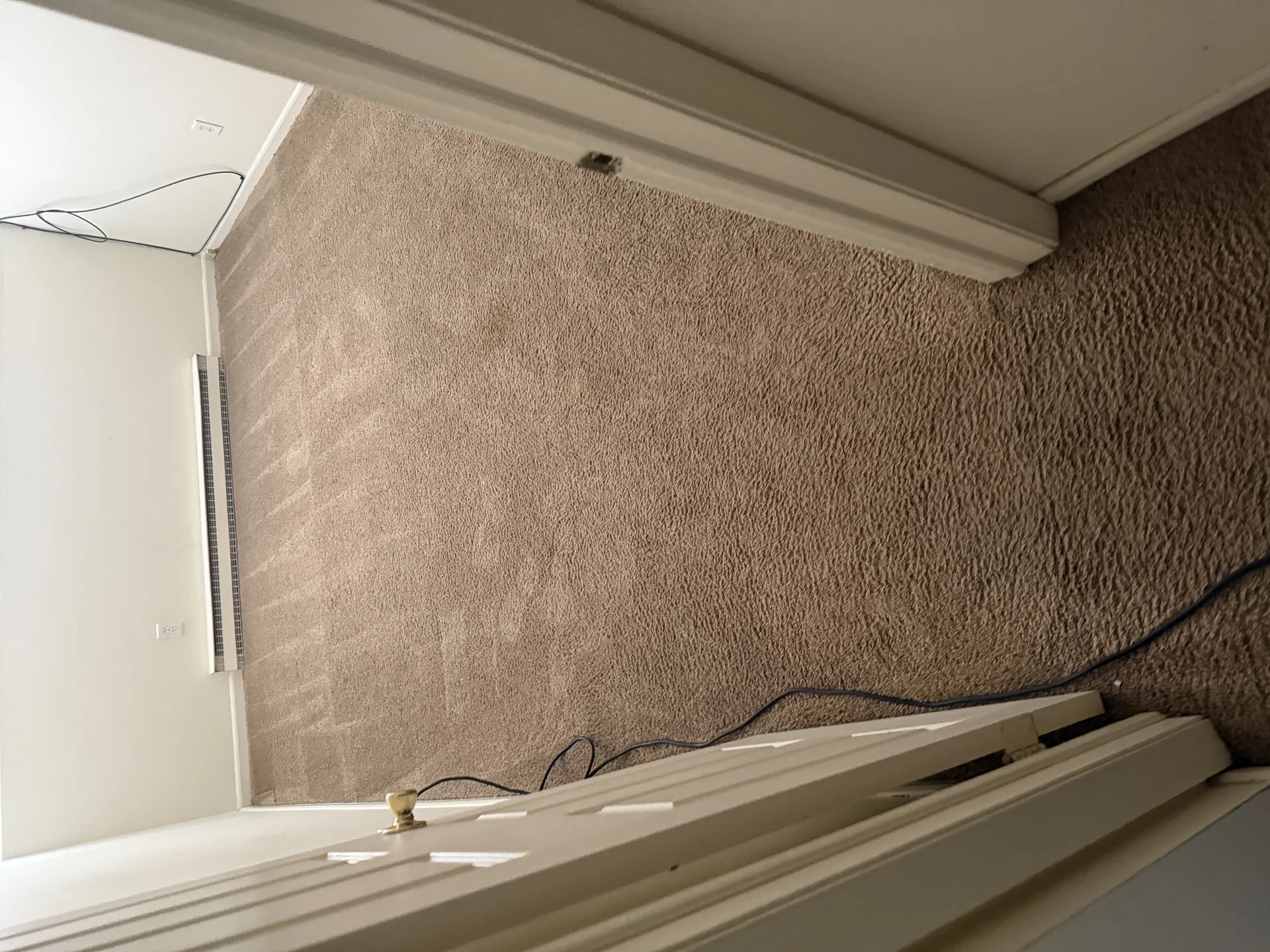
Finish Carpentry & Custom Trim Work in MetroWest & Worcester County, MA
Crown molding, baseboards, custom built-ins, doors, stair work, wainscoting — the details that turn a house into a home, installed by a licensed Massachusetts contractor.
- Licensed Massachusetts Home Improvement Contractor (HIC #218024)
- 5.0★ rated on Google — tight miters, level lines, careful work
- Free In-Home Consultations + Free Estimates
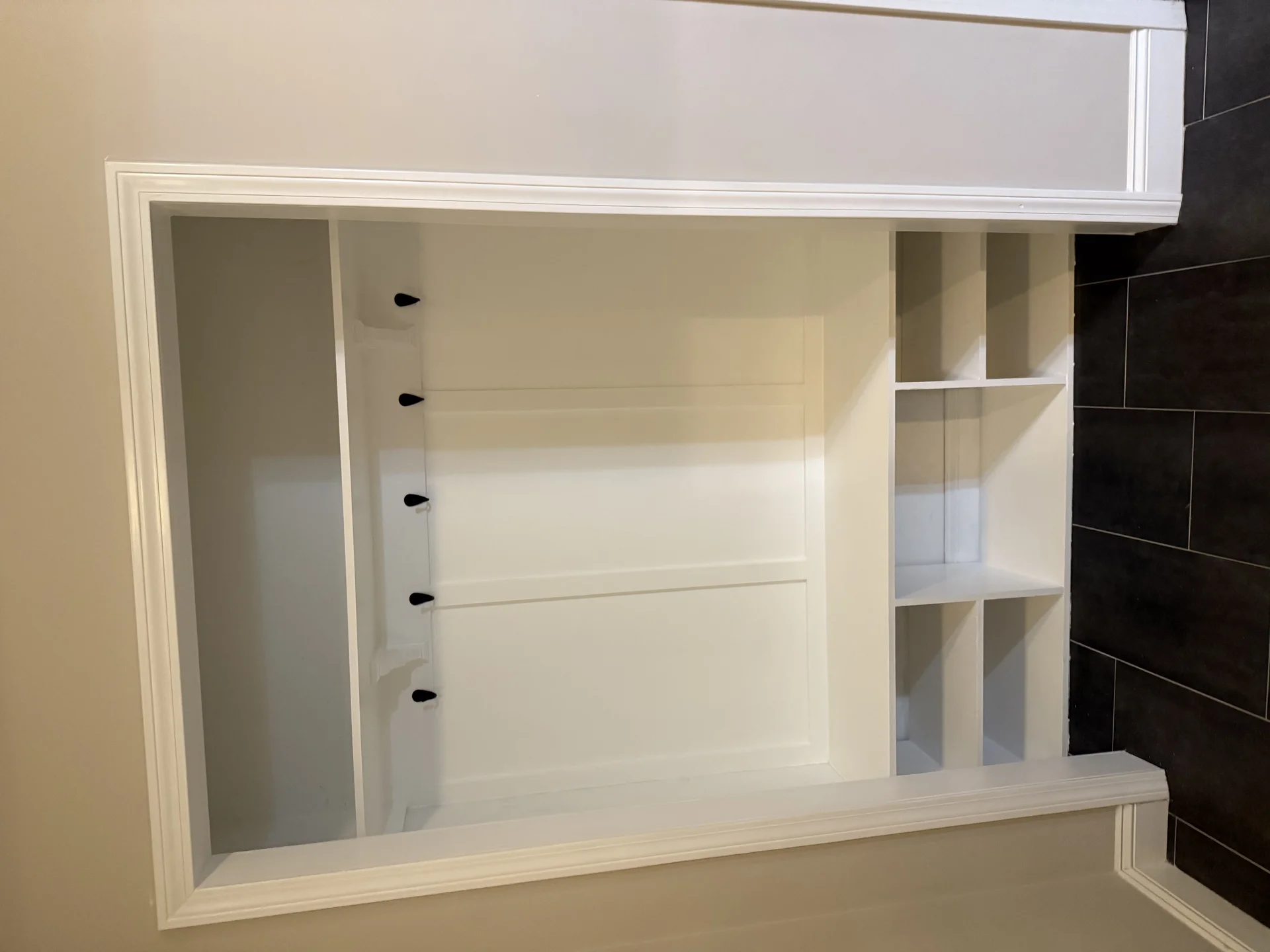
- Custom built-ins matched to your existing trim and paint
What Finish Carpentry Covers
Finish carpentry is the work where every cut shows. Crown molding miters that aren’t tight read as sloppy from across the room. Baseboards that aren’t level look wavy under raking light. Built-ins with face frames that aren’t square never close right and never look right. Door casings that aren’t plumb make every door feel cheap.
This is the kind of work where experience matters more than tools. We’ve spent years on the trim and millwork that finishes high-end homes across MetroWest — from period restoration in Westborough Victorians to modern minimalist trim in new construction in Marlborough. The principle is the same in both styles: every joint tight, every line level, every detail intentional.
As a licensed Massachusetts Home Improvement Contractor (HIC #218024), we handle finish carpentry both as standalone projects (whole-house trim upgrade, single room of built-ins) and as the finishing layer on full renovations (after the bathroom or kitchen is built, we come back and do all the millwork).
Trim, Crown Molding, Baseboards & Casings
The four pillars of finish carpentry in a home:
- Crown molding: Single-piece, two-piece, or three-piece (built-up) profiles. Painted or stained. Standard or oversized for high ceilings.
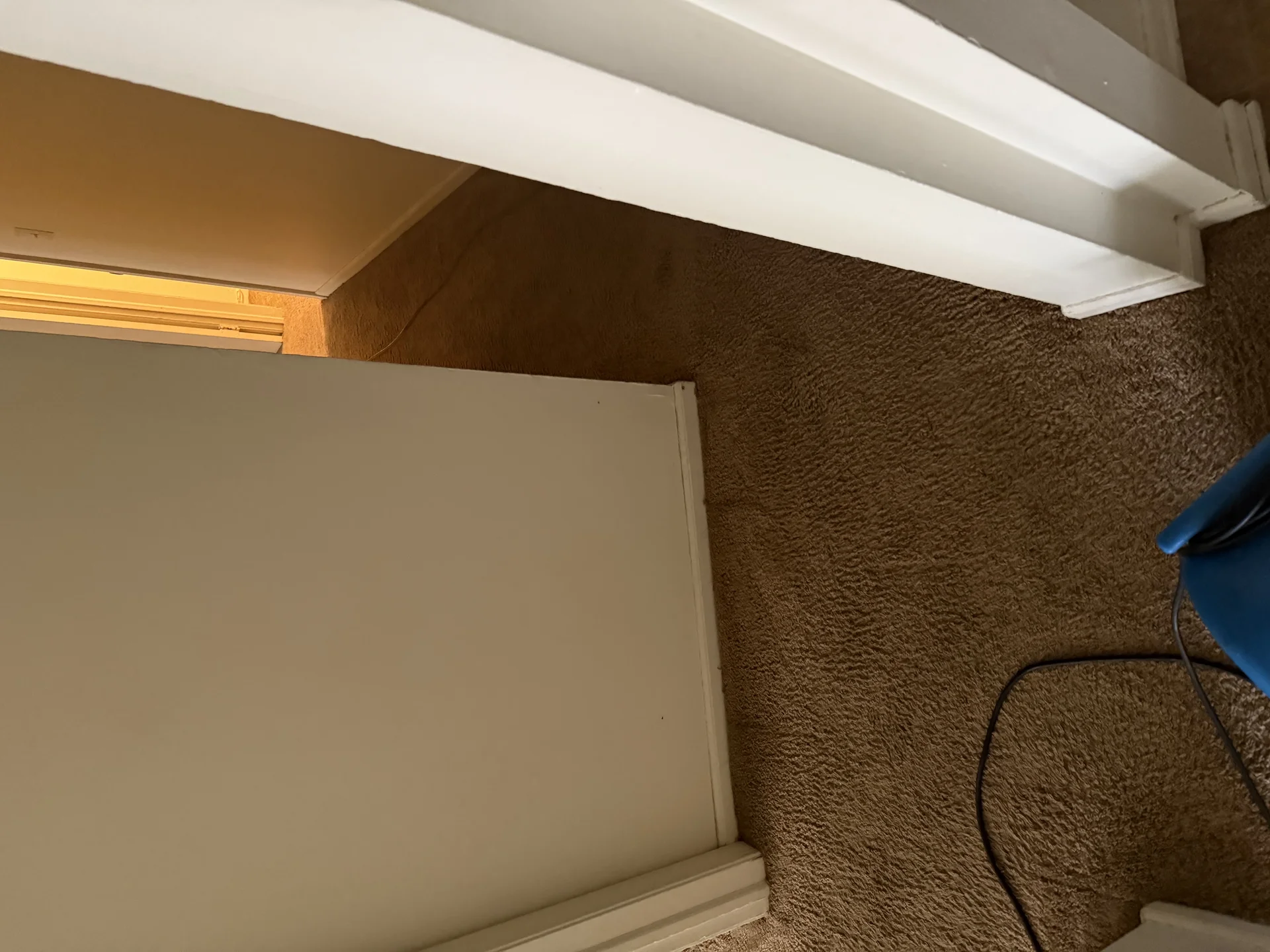
- Baseboards: 3 1/4″ colonial, 5 1/4″ or 7″ tall craftsman, two-piece with cap shoe. We match existing or upgrade to taller profiles.
- Door and window casings: Flat 1×4, fluted, mitered, plinth-block with rosettes. Same profile around every opening.
- Chair rail, picture rail, and panel molding: Decorative wall details that add architectural interest at low cost.
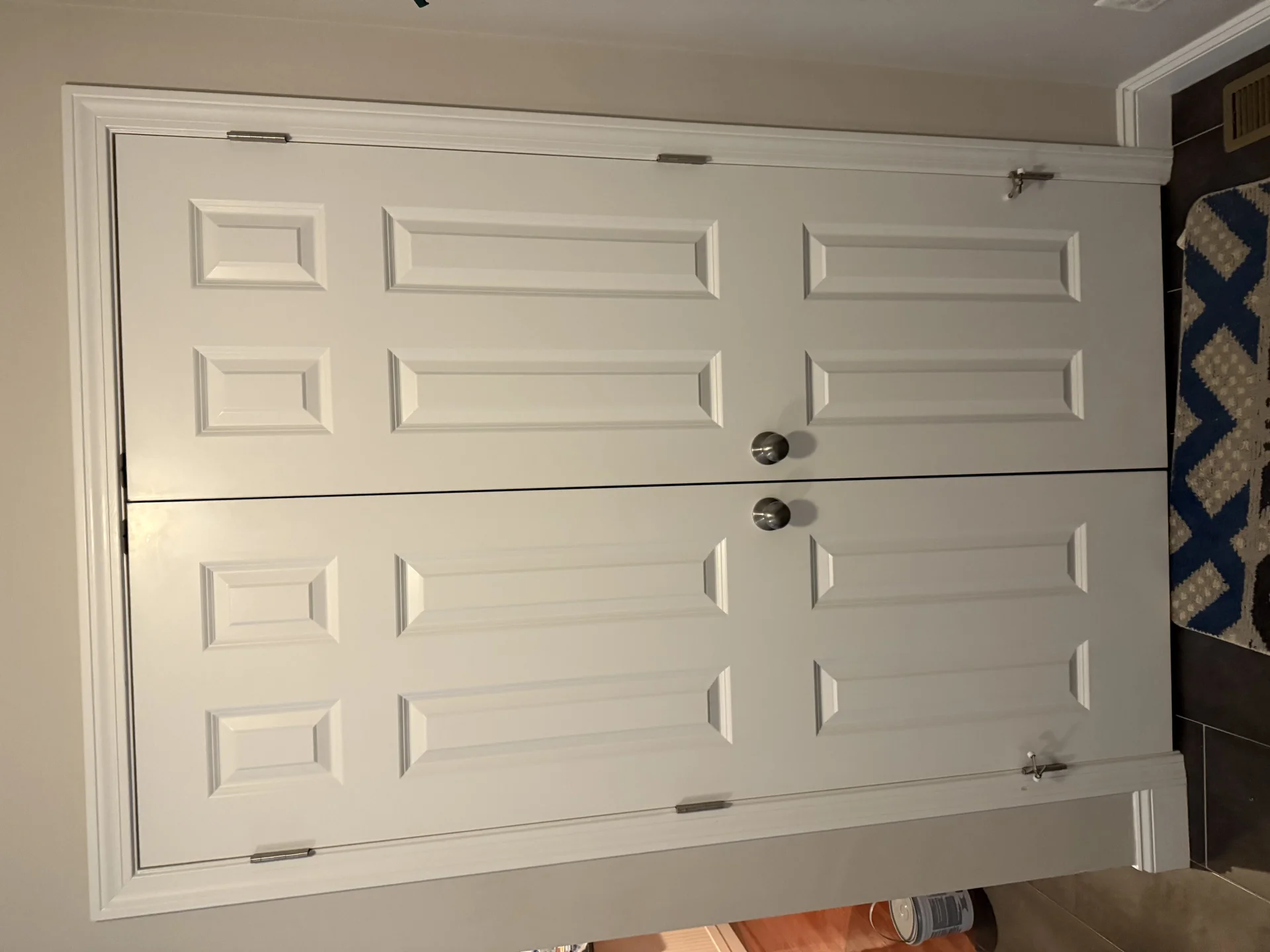
Door Installation
Common door projects:
- Pre-hung interior doors: Hollow-core or solid-core, primed or stained. Standard openings, raised panel, flat panel, or shaker.
- Slab doors on existing jambs: When the framing and casing is good, we hang a new slab and rebuild the hinge mortises.
- French doors: Double-doors with glass for offices, dining rooms, sunrooms.
- Pocket doors: Slide into the wall — great for bathrooms and closets where swing space is tight.
- Barn doors: Sliding hardware mounted on a header above the opening. Modern farmhouse staple.
- Exterior doors: Pre-hung fiberglass or wood entry doors, full sidelights, weatherstripping.
Custom Built-Ins
Built-ins are one of the highest-ROI projects in a home — they add storage, visual weight, and bespoke character that you can’t get from store-bought furniture. Common projects:
- Bookcases flanking a fireplace: Floor-to-ceiling with cabinet bases and adjustable shelves above.
- Window seats with storage: Bench seats with lift-up lids over storage compartments, often paired with cushions and pillows.
- Mudroom benches with cubbies and hooks: Family command center for coats, shoes, backpacks.
- Entertainment centers: Custom TV walls with concealed cable management, integrated speakers, and bookshelf returns.
- Home offices: Wall-to-wall desks with cabinet bases and bookshelves above.
- Reading nooks: Built-in window seats with bookshelves, often under stair landings or in dormer alcoves.
- Wall-to-wall storage: Closet conversions, pantry build-outs, basement storage rooms.
Stair Work
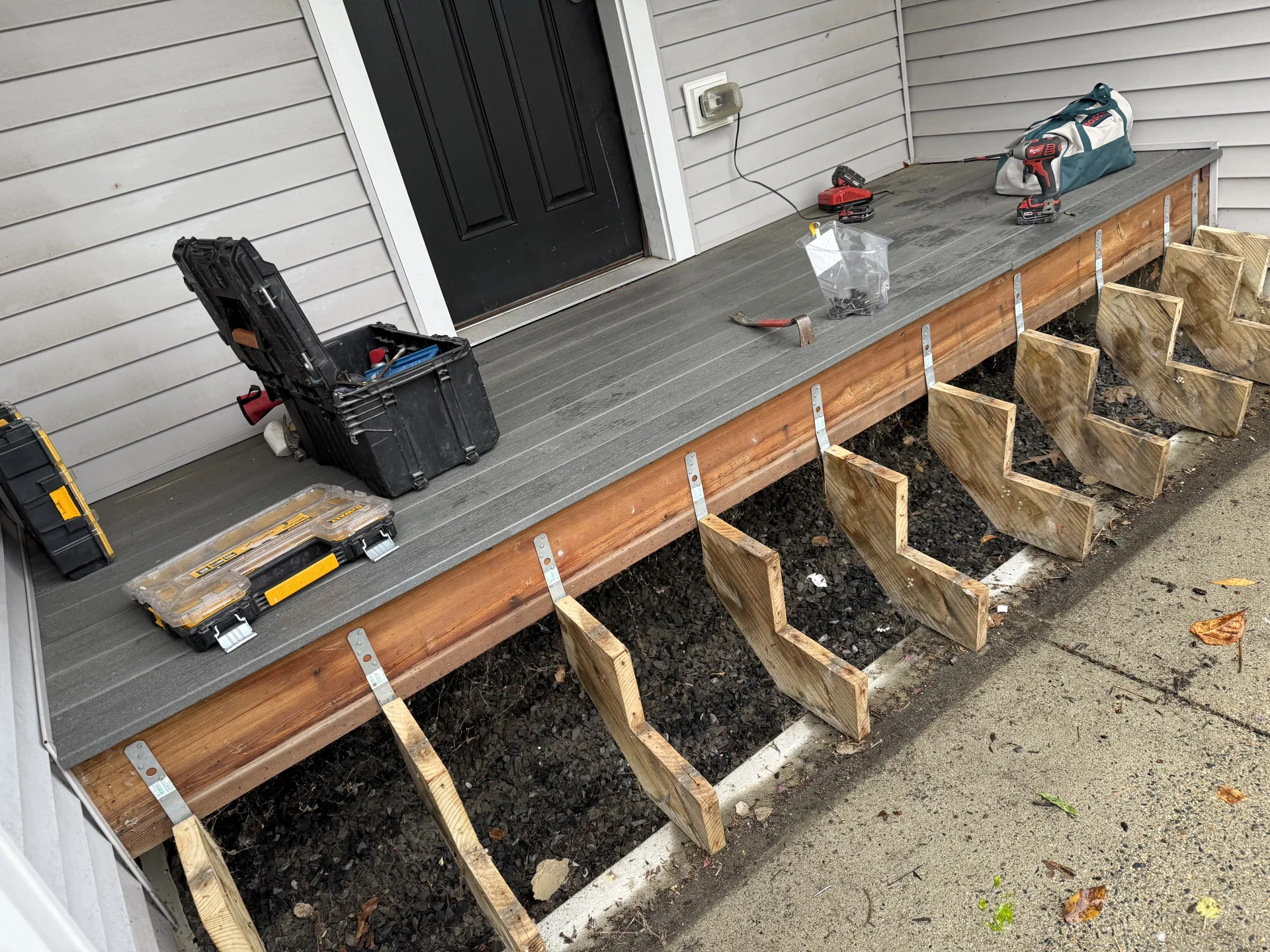
Stair upgrades are surprisingly transformative. Common projects:
- Replace carpeted stairs with hardwood (oak, maple, or stained pine treads and painted risers)
- Refinish existing treads — sand, stain, polyurethane
- Custom balusters (square, turned, iron, modern cable)
- New handrails (round, square, or chunky modern profiles)
- Skirt boards and stringer covers
- Wainscoting on the stairwell wall
Wainscoting & Accent Walls
Wall paneling is one of the easiest ways to add architectural detail to a builder-grade room:
- Beadboard wainscoting: Classic 3-4 foot tall paneling. Bathrooms, mudrooms, dining rooms.
- Board-and-batten: Vertical battens spaced over flat panels. Modern farmhouse style.
- Shaker / shadow box panels: Frame-and-panel detail with chair rail above. Formal dining and hallways.
- Shiplap: Horizontal overlapping boards. Bedroom accent walls, mudrooms, entryways.
- Full-height paneling: Floor-to-ceiling wainscoting. Studies, libraries, formal living rooms.
Materials We Use
- Poplar: Standard paint-grade trim wood. Takes paint beautifully. Most baseboards and crown.
- MDF: Medium-density fiberboard. Stable, no grain, perfect for painted built-ins and wainscoting panels.
- Oak: Standard stain-grade wood. Common in stair treads and traditional bookcases.
- Maple: Smoother grain than oak. Often used for painted built-ins where a slight wood texture is desired.
- Cherry and walnut: Premium stain-grade species for higher-end built-ins.
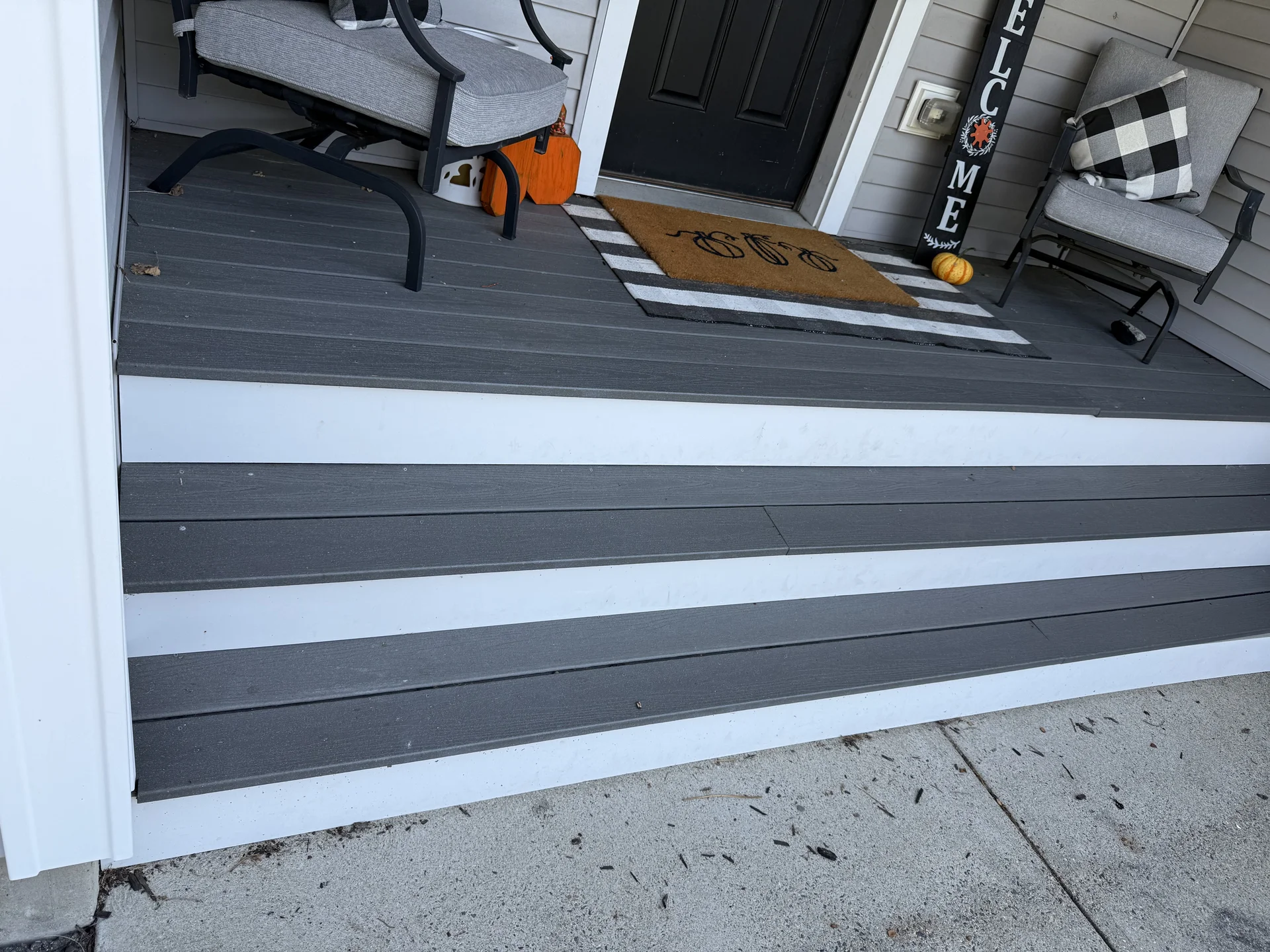
- PVC / Azek: Cellular PVC for exterior trim — won’t rot, holds paint forever.
- Plywood: Cabinet-grade plywood for built-in box construction (stronger than solid wood for shelves).
Why Finish Carpentry Transforms a Remodel
A bathroom remodel with great tile and a generic flat-stock door casing looks unfinished. The same bathroom with custom built-up casings, taller baseboards, and a wainscot below the chair rail reads as a million-dollar bath. It’s the same room. The difference is the finish carpentry.
That’s why we often loop finish carpentry into the end of full renovations — it’s the layer that takes a great execution and turns it into a memorable space.
Cities We Serve for Finish Carpentry
Marlborough • Hudson • Northborough • Southborough • Westborough • Shrewsbury • Framingham • Sudbury • Natick • Ashland • Hopkinton • Wayland • Weston • Newton • Concord • Cambridge
Frequently Asked Questions
What’s the difference between rough carpentry and finish carpentry?
Rough carpentry is the structural framing nobody sees once the house is done — studs, joists, sheathing. Finish carpentry is everything you do see: trim, crown molding, baseboards, doors, built-ins, stair parts, mantels. It’s the work where 1/16th of an inch shows.
How long does crown molding installation take?
A typical 12×14 room with single-piece crown takes about a day to install (cut, fit, nail, fill, caulk). Larger or layered (3-piece) crown can take 2-3 days per room. Whole-house crown molding installations typically run 1-2 weeks.
Can you build custom built-ins to match existing trim?
Yes — we match existing trim profiles, paint colors, and wood species so the built-in looks like it was always there. Common projects: bookcases flanking fireplaces, window seats with storage, mudroom benches with cubbies, entertainment centers.
What materials do you use for built-ins?
Most painted built-ins are MDF or paint-grade poplar for the panels and crown, with plywood box construction for strength. Stained built-ins are typically maple, oak, cherry, or walnut. Exterior trim is usually PVC (Azek) for rot resistance.
Do you install interior doors?
Yes — pre-hung interior doors, slab doors hung on existing jambs, pocket doors, barn doors, and French doors. We also do door hardware (knobs, hinges, dummy sets) and weatherstripping when needed.
Can you do stair work?
Yes — we install new treads and risers (replacing carpet-covered stairs with hardwood), refinish existing treads, build out balusters and handrails, and design custom stair details like wainscoting on the stairwell wall.
Add Custom Detail to Your Home
Crown molding, built-ins, doors, stair work — book your free in-home consultation today.
Areas We Serve in MetroWest & Worcester County